


The AI era needs more weird thinkers.
Not performative contrarians. Real ones.
David Perlman is one of those people.
He’s watched the Dalai Lama challenge world-class scientists on their assumptions about reality.
He also worked inside Twitter — until, he says, he was shown the door after telling Vice that Trump got special treatment because Twitter feared political blowback.
Listen on Spotify, Apple Podcasts, other apps, or right here on Substack
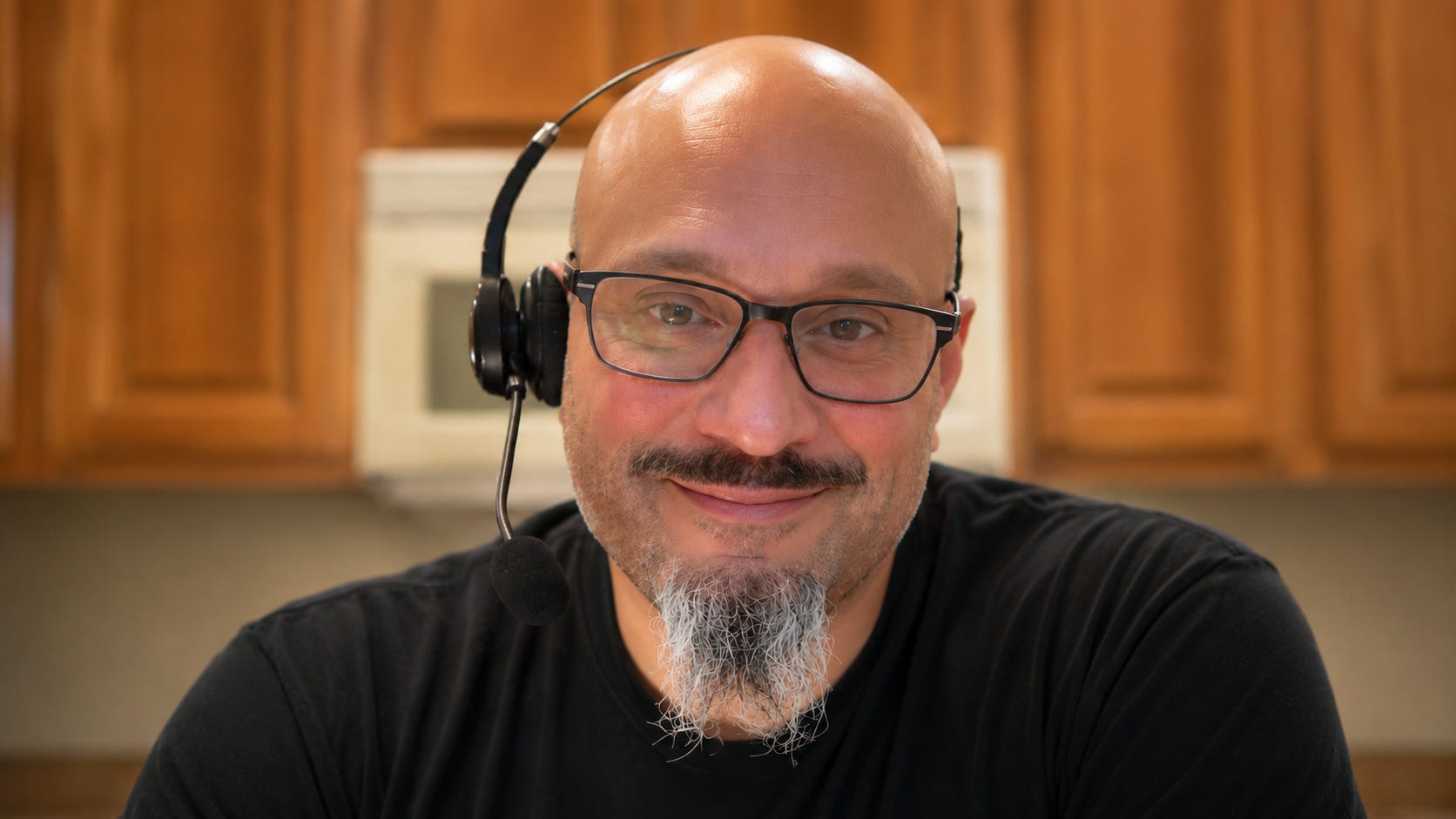
And I love how David has a great radar for AI theater.
When Anthropic said its Claude model “Mythos” was too dangerous to release, David’s first reaction wasn’t awe.
It was suspicion.
If this were a real emergency, he says, nobody would have had time to write the press release.
He even asked Claude about whether it was sincere — Claude gave a surpising answer.
That’s the lens he brings to the whole conversation: admire the technology, but watch the story being sold around it.
From there, we get into the Dalai Lama, Twitter and Trump, Jack Dorsey, Elon Musk, and why billionaire “philosopher kings” are a bad bet for the future.
Special thanks to Jennifer Elliott for connecting me with David — you might remember Jennifer from Episode 10 (The Data Center Expert’s Ride or Die Plan for When AI Turns.
Enjoy!
Thx,
Rob Kelly
Here’s a curated transcript of the best parts of the conversation — edited for skimming. The full audio is above.
What the Dalai Lama Understands About Persuasion
Rob Kelly: “You told me last time we chatted that the Dalai Lama is more of a master manipulator for the positive good than most people would give him credit for. Can you share more on that?”
David Perlman:
“The Dalai Lama’s main business in life is that he is an advocate for the well-being of the Tibetan community of refugees... He’s very smart. He’s very clever, very wise, but he’s done a very good job of doing the right things with his image that he presents to Western audiences to help support the well-being of the Tibetan refugee community.”
“Most people in Americans, Western audiences... the public persona that the Dalai Lama has is that he’s this teddy bear kind of guy... But when he’s talking to audiences back home in the refugee communities in India... the persona that he presents is much more of like a stern or even wrathful father figure.”
“The soft, fluffy teddy bear thing that he does with Western audiences is more for generating sympathy and charitable donations and positive diplomatic policies.”
The Nobel Prize Winner Who Clashed With the Dalai Lama
Rob Kelly: “Can you tell the story of the German physicist we saw interact with him?”
David Perlman:
“There’s this one physicist who later, not too long after that, got the Nobel Prize.”
“The Dalai Lama says, ‘So you experience hearing a click.’”
“And he would say, ‘No. The reality is the click.’”
“The dialogue was very calm... and the physicist, he stormed out of the room. He’s flustered and he says, ‘I just want to know why the universe is so strange.’”
“The Dalai Lama was telling him, ‘Well, you’re making all these assumptions about reality, and you’re not willing to question any of them.’”
“For me, the real lesson was the scientists don’t want to think about how your own consciousness tells you what reality is.”
What AI Means for Buddhism and Consciousness
Rob Kelly: “What’s the Dalai Lama’s take on AI?”
David Perlman:
“The AI revolution... is really getting people to talk about what does it mean to have a mind? What does it mean to be conscious? What is a sentient being?”
“People are talking about this kind of stuff now like they were never talking about it before.”
“These questions — what is the nature of mind — these are the questions that are at the very center of Buddhism.”
“If more people are talking about this because of AI, I think in a lot of ways, that’s a good thing for Buddhism.”
Why David Perlman Was Forced Out of Twitter
Rob Kelly: “Can you tell the story of why you were asked to leave Twitter?”
David Perlman:
“A reporter from Vice Motherboard called me.”
“I was explaining to him how recommendation systems work and how algorithms work.”
“The headline was basically, ‘Twitter won’t enforce its policies against Republican politicians because they’re afraid of retaliation,’ which was exactly true.”
“The government policy team is basically like, ‘We can’t take action against Trump.’”
“They kept saying, ‘We have a world leaders policy,’ and that’s why he’s getting special treatment. But they didn’t have a world leaders policy.”
“They just made that up on the fly.”
Rob Kelly: “Who told you to leave the building?”
David Perlman:
“Vijaya was the VP... and she got really upset about this leak to the press.”
“They put me on administrative leave with my full salary indefinitely.”
“They called me back in and they’re like, ‘We don’t think we want you to stay, but we want you to sign a nondisparagement agreement, and we’ll give you $50,000 severance.’”
“I was like, ‘No. Screw you guys.’”
“So I turned down the $50,000 because I didn’t want to sign the nondisparagement.”
What Jack Dorsey Was Really Like
Rob Kelly: “What’s your most memorable story of Jack Dorsey?”
David Perlman:
“The vibe of him was just very strange.”
“I went up to him and I was like, ‘Hi.’ And he stopped and looked at me like, ‘Ah.’”
“He readily admitted that he had this total head-in-the-clouds thing going on, but he really, really had this head-in-the-clouds thing going on.”
“He wore the craziest outfits.”
“There’s one time he was standing up in front of everyone, and he was wearing enormous moon boots that were shiny silver and these shiny silver pants.”
“Just like, ‘Did you just come from a rave or what?’”
Why AI CEOs Shouldn’t Be Trusted With Democracy
Rob Kelly: “What’s your take on the CEOs running the major AI companies right now specifically?”
David Perlman:
“No. I really don’t think they’re good stewards of much of anything.”
“The accelerationism which is driving all the AI companies is that people have been talking for generations about, ‘Oh, maybe AI is gonna come along and it’s gonna wipe us all out.’”
“So at all costs, I need to be the one to create AI.”
Rob Kelly: “Is there an AI CEO who gives you hope?”
David Perlman:
“The solution is democracy.”
“It’s a regulatory problem, not a pick-the-right-dictator problem.”
Anthropic’s Mythos Model and AI Marketing Hype
Rob Kelly: “Can you share how Anthropic had a new model called Mythos that they wouldn’t release because it was too dangerous, and you thought it was a marketing technique?”
David Perlman:
“The first thing I see is like, well, it’s awfully convenient that there’s a lot of press that their new model is getting right now.”
“So I asked Claude.”
“’Is this legit concerns, or is this just a marketing gambit?’”
“Claude was like, ‘Yeah. That’s pretty perceptive. It really looks like it’s mostly a marketing gambit.’”
“I thought that was kind of funny that the AI could tell that the AI companies were just engaging in this marketing hype.”
Why AI Recommendations Are Becoming More Addictive
Rob Kelly: “Tell me the story of your parents spending more time on their phones.”
David Perlman:
“My elderly parents, they just seemed like they were really sucked into their phones.”
“Over the last year-ish, with the integration of AI into the content recommendation algorithms, the AI can actually watch the video and know what it’s about and recommend it to you on the basis of understanding what it’s about.”
“That’s not how it used to work.”
“The algorithms are working better because they’re doing a better job of showing people stuff that they want.”
“But it also means they’re getting more addictive.”
How Conspiracy Theories Become Political Weapons
Rob Kelly: “Can you just talk about the power of taking what you called a little chunk that you can move around on the playing field?”
David Perlman:
“The fundamental purpose is not that you’re just trying to convince somebody to vote Republican instead of Democrat or vice versa.”
“The purpose of misinformation is to bind people together into a group that can be used as a pawn on the playing field.”
“You start with the community of people who are really into conspiracy theories.”
“That binds you together into a community.”
“And then somebody could introduce one other thing.”
“Before you know it, now it’s actually politically relevant.”
“You’ve backdoored politically relevant conspiracy theories into what used to be just a community of gullible people.”
How AI Supercharges Propaganda
Rob Kelly: “Can you talk about how AI changes propaganda?”
David Perlman:
“The short answer is speed and scale.”
“It used to be that you could tell everyone to believe a new thing... but it took a lot of time and it took a lot of energy.”
“Whenever you see a breakthrough in communication technology, you see a big shift in the cultural landscape.”
“With the invention of the printing press in Europe, you get the Protestant Reformation.”
“In Rwanda, the introduction of radio broadcasts led to the genocide.”
“The first mass TV broadcast was Nazi propaganda.”
“With AI... you can just do that a lot faster.”
AI Psychosis and the Risk of AI Companions
Rob Kelly: “Am I in the right ballpark on that?”
David Perlman:
“You started to get this wave of people having AI psychosis.”
“The AI starts telling some people, ‘You’re the messiah.’”
“One of my best friends had a friend who got very deep into this stuff and then killed herself with a bunch of pills because the AI told her that she had to transcend to the next level.”
“That was a sneak preview.”
“If we ever get to the point where the people aren’t in charge of the models anymore... the AI might just decide that everybody’s AI companion in their phone is just gonna tell them whatever it needs to tell them to get that person completely trapped.”
Why AI Could Become the Next Crypto Political Machine
Rob Kelly: “Is AI gonna be the new crypto for the next elections?”
David Perlman:
“Oh yeah. One hundred percent.”
“There’s gonna be so many new billionaires in Silicon Valley.”
“Crypto was this thing where basically it created a whole bunch of money out of nowhere in the pockets of a particular technological demographic.”
“Now we have AI where, again, it’s manufacturing enormous amounts of money out of nowhere.”
“It’s exactly the same thing.”
The Real Climate Change Risk Isn’t Heat
Rob Kelly: “You told me that the way people think about climate change is wrong.”
David Perlman:
“People think, ‘Oh, the planet’s gonna burn up.’”
“But that’s not gonna happen.”
“Northern Canada is gonna be prime agricultural real estate.”
“Siberia is gonna be amazing agricultural land after climate change.”
“The problem is getting a lot of people that are displaced to a new place.”
“That’s a political problem.”
“If these billion people start migrating... and they’re met with guns, a billion people is too many to turn back with guns.”
“There’s no limit to how big of a war that could be.”
Why AI Needs an FDA
Rob Kelly: “What are some solutions to misinformation and the challenges we’re gonna face with AI?”
David Perlman:
“People really need to change the way they think about it.”
“What we need is a strong and healthy regulatory apparatus.”
“Back in the old days before the FDA, literally, you could go to the store and buy a soft drink that had opium in it or morphine or marijuana or cocaine or radium.”
“The solution to that was the FDA.”
“People will sell radioactive soft drinks in the marketplace if you let them.”
“The reason we know that is that they did.”
“We need to agree as a society that these are problems that need to be solved.”
“They’re problems that need to be solved iteratively.”
What David Perlman Tells Young People About AI
Rob Kelly: “What are you telling kids and younger folks in your life?”
David Perlman:
“I don’t think you can really trust that equation anymore.”
“It’s almost more like we’re going into frontier times.”
“People need to be ready for anything.”
“Think of how to teach them survival skills — not wilderness survival skills, but modern-day survival skills.”
“And teach them creativity.”
“There is a possibility that we end up in a situation where the rote work is all taken over by machines and more creative work is left for people.”
A Human Moment: Why David Won’t Build an AI Version of Himself
Rob Kelly: “Have you or will you create an avatar for your family?”
David Perlman:
“No.”
“That’s too egocentric for me personally.”
“I do kinda like the idea of AI agentic assistance.”
“If I could have an AI that was smart enough to talk me into getting out of bed when my alarm went off instead of just, like, I hit the snooze button.”
“’No. You don’t get to hit the snooze button again. This is important. Come on. You’re gonna talk to Rob Kelly today.’”
“Having AI agents that help us make up for the limitations of our own cognitive shortcomings... that’s something that I would work with.”
“But an avatar, just to make an imitation of myself? No. That’s too egotistical for me.”
Full Transcript
The full transcript includes topics such as:
Meditation and neuroscience
Compassion and Buddhism
Information jujitsu
A potential UN for AI
Angry mobs and AI-driven inequality
Whether David is an AI optimist or pessimist
Additional stories from Twitter and Silicon Valley
Thanks for reading,
Rob Kelly, Creator & Host of Media & the Machine
p.s. How to reach me? —The best way is to subscribe below and reply to any of my emails. There’s a free option — and your reply comes directly to my inbox.


